What Happend to Civil War Families After Wae
The American Ceremonious War started due to the secession of Southern states who then went on to form a new federal government, the Confederate States of America. American president Abraham Lincoln declared in his inaugural accost that he would apply forcefulness to maintain possession of Federal belongings and the state of war began with the Confederate attack on Fort Sumter on April 12, 1861. The American Civil War lasted till May 9, 1865 and was ultimately won by the Union forces. However, this came at the price of the lives of 620,000 to 750,000 people, which is more American deaths than in all other U.S. wars combined. The chief reasons backside this plush war include the long standing conflict between the two sides over the result of slavery; and friction over which powers belonged to the sovereign states and which to the Federal government. Know more nearly the American Civil State of war through its 10 major political, economical and social causes.
#1 Economics of Cotton
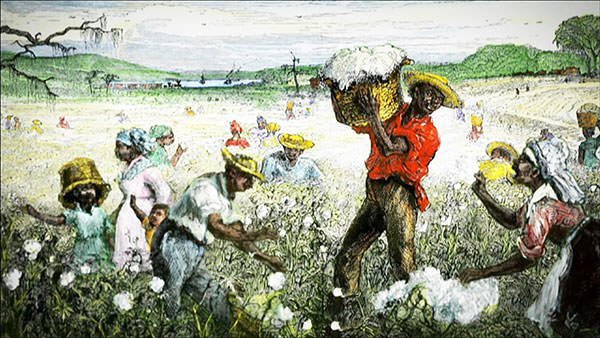
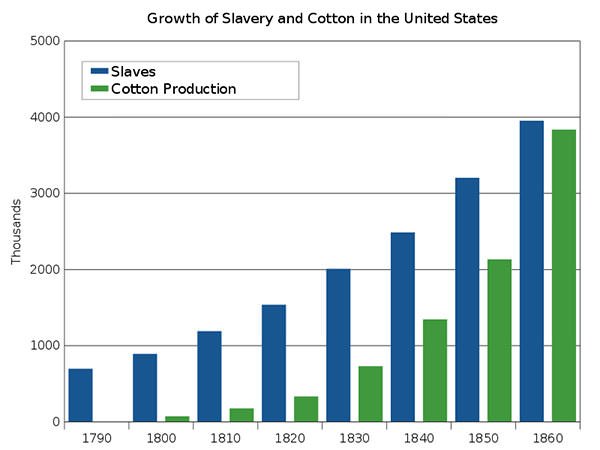
The financial and political influence of cotton in the 18th and 19th century was unprecedented. It was perhaps far greater than that of the oil manufacture in the late 20th and early 21st century. With the introduction of the cotton wool gin in 1793 and the flourishing slave merchandise, the southern states of America became the primary cotton suppliers of the world. Past the mid-19th century, the southerners were supplying more than than lxx pct of the cotton fiber to Great Uk, the leading world economic and colonial ability of the time. The plantation owners, with black cotton growing slaves, gained tremendous wealth and influence during the times and were willing to go to whatsoever lengths to protect their interests. The long tension between the northern Costless states and the southern Slave states was reaching a boiling point at this time. With the economies of major world powers Great britain and French republic dependent on cotton from the southern states, many southerners believed that world powers would intervene on their behalf, giving them the conviction to take on the more powerful and resourceful north.
#2 Slavery
Past the mid-19th century, slavery had been the cause of friction between the southern S lave states and the northern F ree states for many decades. Slavery was illegal in much of the northward, beingness outlawed in the late 18th and early 19th century. All the same, it was deeply interwoven with the economics of the southern states, which had get the principal source of raw cotton for the British and European industries. By the beginning of the Civil State of war, some 4 one thousand thousand Africans and their descendants toiled as slave laborers in the South. The per capita wealth of Southern whites was twice that of the Northerners. Three-fifths of the wealthiest individuals in the U nion came from the southern states and they were deeply invested in slavery. On the contrary the north was more invested in industry and entrepreneurship despite a reasonably poor working class. The political and social climate in the northward had turned more and more against the institution of slavery and, to resolve the issue, a conflict or a major compromise was inevitable.
#3 Country'south Rights
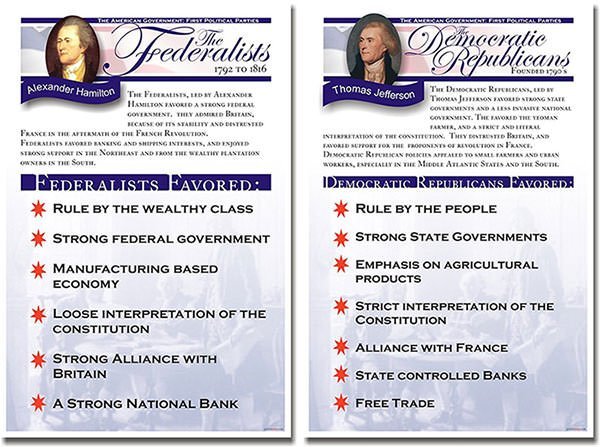
The politics and debates over which powers belonged to the sovereign states and which to the Federal government were not uncommon in the Usa since its inception. It was in fact the ground for the germination of its first two political parties; the Autonomous Republican party formed in 1792 under Thomas Jefferson, favored state rights while the Federalists under Alexander Hamilton believed in a centralized national government with stiff financial roots. Slavery w as be the master bone of contention in this land vs federal government tussle leading upward to the civil war. The Slave states were determined that slavery was a state result and they were unwilling to accept any federal intervention on the subject.
#4 Territorial Expansion of the Us
The politics over slavery began to oestrus up in the early to mid-19th century equally new territories were being added to the spousal relationship. As long as at that place were equal number of slave holding states in the south vis-a-half dozen Gratis states in the n, there was a perceived balance of power. However each new territory that applied for statehood would tilt the scales depending on weather it joined equally a Free State or a S lave state. The northern whites feared that if slavery continued to aggrandize to new territories they would inevitably join the southern slave-belongings states making the n irrelevant and the Usa would eventually get totally dominated by elite Southern slaveholders. The Southerners on the other hand viewed slavery as the key to their economic well-being. Its expansion to newer territories opened up tremendous production opportunities for them to further their political and economic interests. This tussle led to the Missouri Compromise in 1820 establishing lands west of the Mississippi and below latitude 36º 30′ as slave and northward of the line, except Missouri, as free. The political struggles over the issue continued with moments like the Wilmot Proviso Debates of 1846, victory in the Mexican American Due west ar in 1848, the Fugitive country law and the C ompromise of 1850, the Kansas Nebraska Act of 1854 and the Lincoln Douglas debates of 1858. These tussles ultimately led to a point where civil war became unavoidable.

#5 The Abolitionist Movement
The American abolitionist movement emerged in the 1830s every bit office of religious revivalism seeing slavery every bit a personal sin and emancipation equally a repentance for the sin. The Abolitionists tried to reach and convert a mass audience. They met with opposition from private slaveholders and national religious institutions. In 1831, abolitionist William Lloyd Garrison began publishing the Liberator. Information technology was supported largely by free African-Americans, who played a major part in the movement. The American Anti-Slavery Society was founded in 1833 in Philadelphia by Garrison, Arthur and Lewis Tappan, and about threescore other delegates. In the coming years they would establish hundreds of branches across the Gratuitous states producing anti-slavery literature, lectures and petitions demanding Congress to end all federal support to slavery. The Abolitionists also played a major part in the underground railways; a network of secret routes, meeting places and prophylactic houses used by slaves to escape S lave states to achieve Free states and Canada. It helped an estimated 100,000 slaves over a few decades.
#6 Uncle Tom'due south Cabin
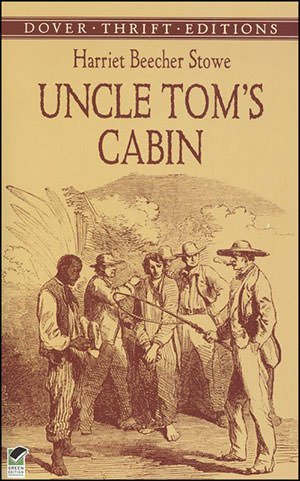
Uncle Tom'southward Cabin was a path breaking fiction novel by Harriet Beecher Stowe, kickoff published in installments in a magazine during 1850–51. It appeared as a book in 1852 selling 300,000 copies in that year and it continued to sell well for many more years. Though abolitionist press had been running in America for a few decades, many viewed them as an extreme fringe. In her work of fiction, notwithstanding, Harriet Beecher Stowe was able to connect to the full general readers delivering an extremely sensitive and powerful message. Uncle Tom'southward Cabin portrayed the lives of the slaves and their owners, how slavery operated as a business concern, how the slaves were bought and sold, and how they were separated from their families. Stove's characters were white and black, of the Northward and the South, chivalrous and sadistic, all grappling with the institution of slavery. The novel with its tremendous success was instrumental in irresolute the public perception on slavery. It is oftentimes quoted though non verified that when Abraham Lincoln met Stowe at the White Firm in December 1862, he reportedly greeted her by saying, "Is this the piffling woman who made this Great State of war?"
#7 Bleeding Kansas
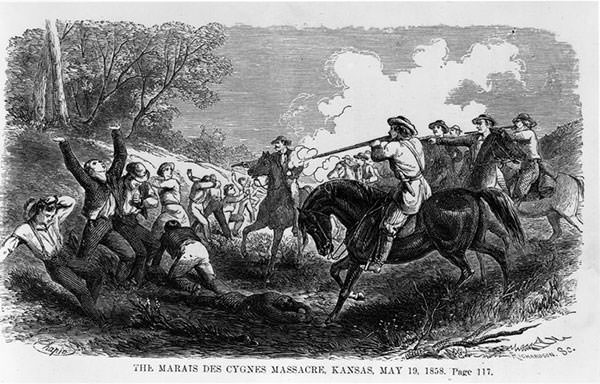
In 1854, the Kansas Nebraska A ct was passed which overturned the 1820 Missouri Compromise and mooted for pop sovereignty. That meant that instead of having a breadth dissever the slave and non-slave territory, the residents of the state would decide whether it joined as a slave country or a free country. This led to the flooding to the state of both pro – slavery and anti-slavery factions forming their separate governments and trying to influence the conclusion. Popularized by the New York Tribune the term 'B leeding Kansas' refers to the series of confrontations, electoral frauds, assaults and retributive murders that took place between these groups between 1854 and 1861. Haemorrhage Kansas was the forerunner to the civil war in a way that it was where confrontations started getting more serious and physical.
#eight The Dred Scott Conclusion
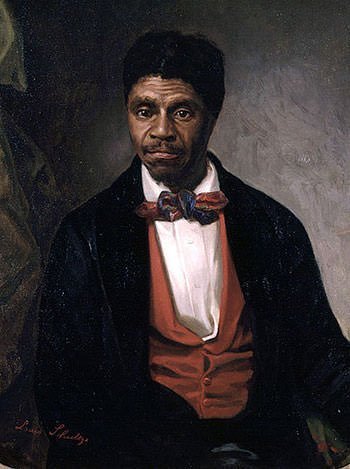
The Dred Scott case or Dred Scott Vs Sanford was a landmark decision in The states Police force history and is considered to have acted as a catalyst in the American Civil State of war. In 1833, Dred Scott was purchased past US ground forces surgeon John Emerson and taken to Winconsin which was a non-slave territory. In 1840, Scott, his new wife, and their young children moved to Louisiana and then to St. Louis with Emerson. After the death of Emerson, Dred Scott and his family came under Emerson's wife Eliza Irene Sanford. Things turned sour in 1846 when, later on years of piece of work, the Scotts attempted to buy their freedom from Sanford and she refused. In 1850 the state court alleged Scott free merely the determination was overturned by the Missouri Supreme Court. In 1856-57 the case was contested in the Us Supreme Court. In a 7–2 decision written by Master Justice Roger B. Taney, the court denied Scott's request ruling that a negro, whose ancestors were imported into the United Sates and sold as slaves, whether enslaved or free, could not be an American citizen and therefore had no standing to sue in federal courtroom. The decision caused an outrage among the anti-slavery groups and is counted amid the worst decisions given by the US Supreme Courtroom.
#9 Election of Abraham Lincoln every bit the President
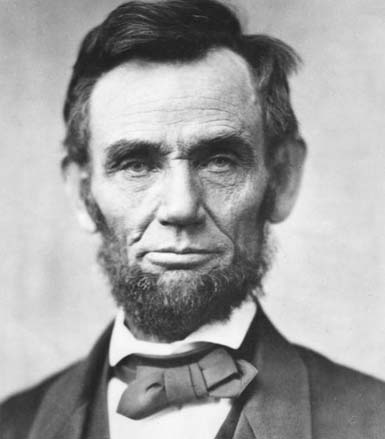
The heated Lincoln Douglas debates of 1858 were a series of seven debates betwixt Abraham Lincoln of the newly formed Republican Party and Stephen Douglas of the Democratic Party. The main issue discussed in these debates was slavery in the United States. Information technology was these debates that fabricated Lincoln a prominent effigy in the national politics. He gained nomination for President in 1860 which totally outraged the southerners who hated him for his anti-slavery stance. On November 6, 1860, to the surprise of many, Abraham Lincoln won the US presidential ballot without the support of a single southern state. Though his election may not have been the main crusade for the war just information technology sent warning bells ringing in the southern states leading to secession and finally the civil war in 1861.
#10 Secession of the Southward from the Union
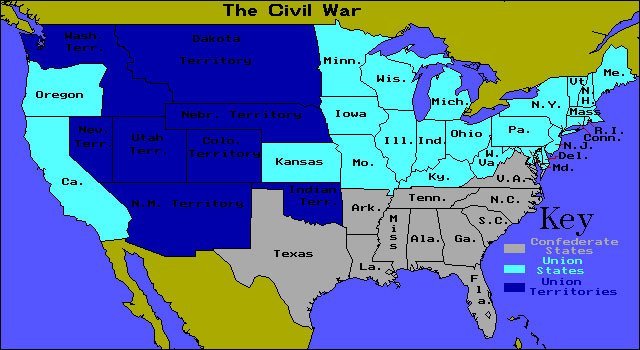
The election of Lincoln acquired the state of Due south Carolina to call a land convention which voted unanimously in favor of secession on 20th December, 1860. The "cotton wool states" of Mississippi, Florida, Alabama, Georgia, Louisiana and Texas followed suit, seceding in Jan and Feb 1861. These states then agreed to grade their own Federal Authorities calling it the Amalgamated States of America, on Feb iv, 1861. Afterwards the Amalgamated assault on Fort Sumter in April, Lincoln chosen on all the states to send forces to recapture federal properties. Virginia, North Carolina, Arkansas and Tennessee ,unwilling to send forces against their neighbors, voted to secede and joined the Confederates. In his countdown accost on March four, 1861 Lincoln called any secession "legally void". He had no intent to invade southern states nor did he intend to cease slavery where it existed. Notwithstanding, he said that he would utilise strength to maintain possession of Federal property. The boxing lines were clearly fatigued.
Cotton Is King
Cultivation of cotton wool using black slaves brought huge profits to the owners of large plantations, making them some of the wealthiest men in the U.S. prior to the Civil War. The importance of cotton fiber and the confidence of the South based on cotton fiber may exist best summed in the 1858 statement of Senator James Henry Hammond of South Carolina, "Without the firing of a gun, without cartoon a sword, should they [Northerners] brand war upon usa [Southerners], nosotros could bring the whole world to our feet. What would happen if no cotton was furnished for iii years? England would topple headlong and carry the whole civilized world with her. No, yous dare not make war on cotton! No power on earth dares brand war upon it. Cotton is Male monarch."
Source: https://learnodo-newtonic.com/american-civil-war-causes
0 Response to "What Happend to Civil War Families After Wae"
Post a Comment